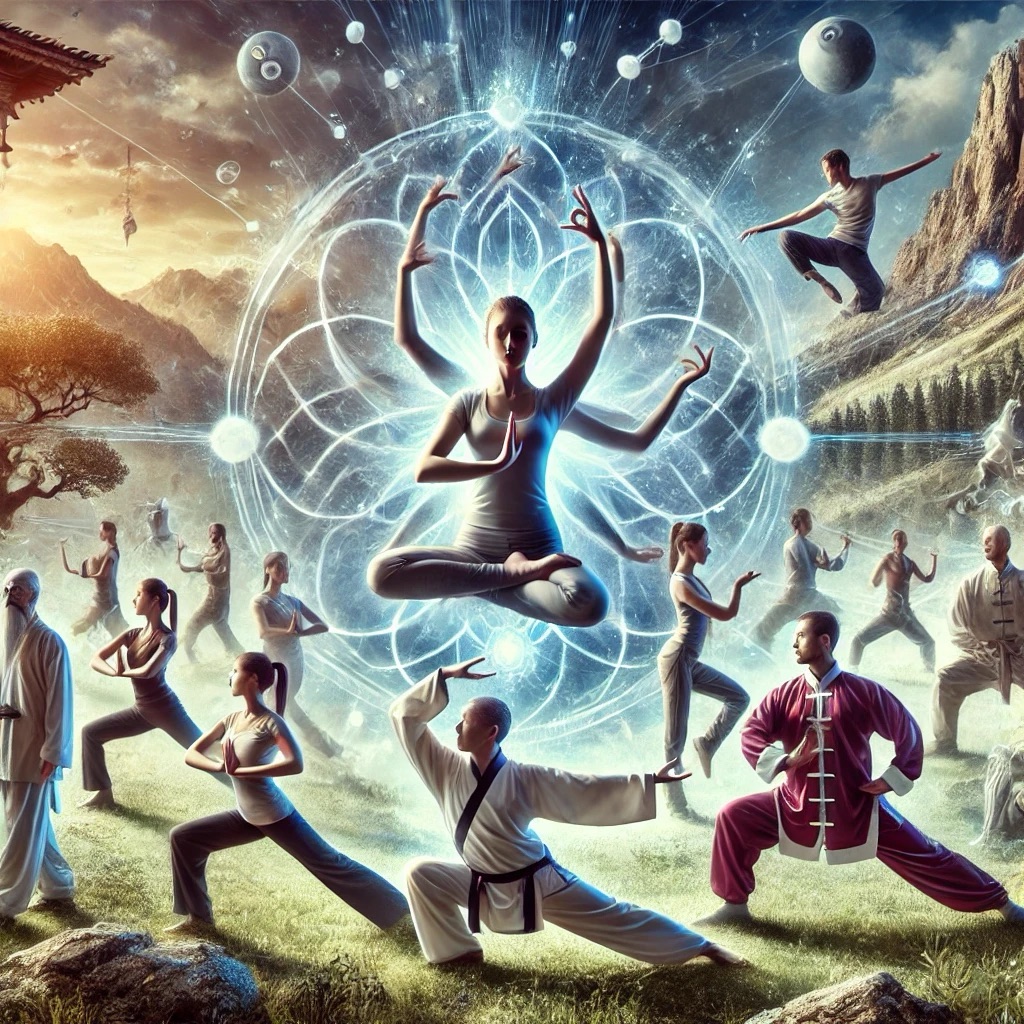
How Different Cultures Have Shaped Ancient Practices
Introduction:
Yoga, originating from ancient India, is more than just a physical practice; it’s a philosophy, a way of life that has transcended boundaries and influenced cultures worldwide. As it spread across the globe, different regions have adapted and molded these ancient practices to align with their unique cultural, spiritual, and physical needs, giving rise to new forms that, while distinct, still echo the essence of yoga.
1. Yoga in China: The Birth of Qigong
China, with its rich history of martial arts and energy cultivation practices, naturally embraced and transformed yoga into what is known today as Qigong. Qigong, which means “life energy cultivation,” shares yoga’s focus on breath, meditation, and physical postures but is deeply rooted in Chinese philosophy, including concepts from Taoism and Traditional Chinese Medicine. This practice emphasizes the flow of Qi (life energy) through the body, much like yoga’s focus on prana, aligning the two practices in their shared goal of balancing body, mind, and spirit.
2. Yoga in Russia: The Development of Systema
In Russia, the ancient practice of yoga influenced the development of Systema, a martial art that integrates physical training with psychological and spiritual development. Like yoga, Systema emphasizes breath control, relaxation, and natural movement, but it adapts these elements to the Russian context, focusing on survival, self-defense, and the harsh realities of Russian history and environment. This blend of physical and mental discipline creates a unique approach to both combat and self-awareness.
3. Yoga in Persia: The Tradition of Zoorkhane
Persia (modern-day Iran) has its own ancient tradition of physical and spiritual training known as Zoorkhane, or the “house of strength.” While not directly derived from yoga, Zoorkhane shares similar principles of physical conditioning, spiritual discipline, and community. The practice combines elements of strength training, music, and ritual, reflecting the Persian emphasis on heroism, ethics, and the connection between mind and body. Zoorkhane can be seen as a parallel to yoga in its holistic approach to physical and spiritual well-being.
4. Yoga and Buddhism: The Transformation into Kung Fu
In the Buddhist monasteries of China, particularly the Shaolin Temple, the principles of yoga merged with local martial practices to give birth to Kung Fu. Buddhist monks, seeking to enhance their meditation and physical endurance, adopted yoga’s asanas (postures) and breath control, integrating them with traditional Chinese martial arts. Kung Fu, therefore, is a fusion of spiritual discipline and martial prowess, embodying the Buddhist pursuit of enlightenment through physical and mental mastery.
Conclusion:
The journey of yoga across the world is a testament to its universal appeal and adaptability. As it encounters different cultures, it absorbs local traditions, philosophies, and needs, transforming into new forms that still carry the core essence of yoga. These cultural adaptations not only enrich the practice but also demonstrate the power of yoga to unify diverse practices under the common goal of holistic well-being.

 360Retreat